
José F. Nodar
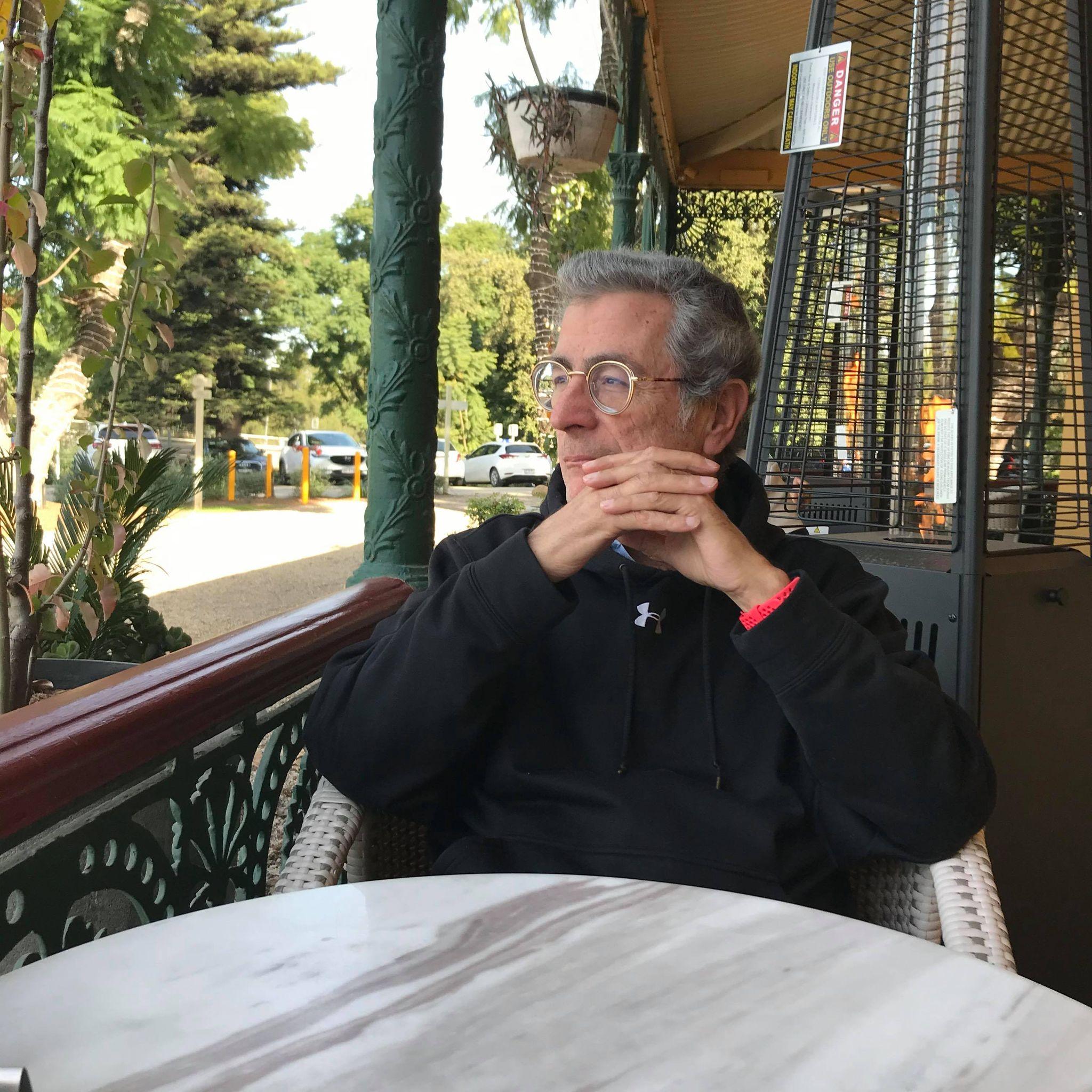
José’s Journey: From Cuba to the Australian Literary Scene
Born in the vibrant city of La Habana, Cuba, José’s early life was steeped in the rich culture of his homeland until the Cuban revolution of 1959 dramatically changed his trajectory. At the tender age of eleven, José was sent alone to an orphanage in Washington, Georgia, a move that marked the beginning of a challenging yet formative chapter in his life. Despite these early hardships, José’s resilience and determination saw him through high school and into the halls of Georgia State University where he studied Business Administration.
His career initially veered towards finance, working with prominent institutions like the First National Bank of Atlanta, before his passion for storytelling led him to the creative realms of writing. Settling in Camden, New South Wales, José immersed himself in a local writers’ group, where he crafted his debut novel and developed his signature character, Danny Monk.
Today, José is an author in Australia, known for his captivating short stories and novels that often draw from his intriguing life experiences. When he’s not weaving tales, José enjoys observing life from the bustling local mall, gathering inspiration for his next great character, or enjoying serene walks around Spring Farm.
THE GAZEBO
The Northport Gazette, 1925, blared the headline: “PROMINENT CITIZEN PAUL MORTLOCK PERISHED IN PARK!”
Paul, a man whose prominence was mostly self‑proclaimed and based on his ownership of the town’s only haberdashery, had met an untimely end beneath a grumpy gum tree in the local park. The circumstances were… unclear.
Some town folk whispered of a rogue cricket ball, others of a disgruntled cravat customer. Officially, it was ruled “death by misadventure,” a catch-all phrase that covered everything from spontaneous combustion to tripping over one’s own top hat.
To commemorate Paul (and perhaps to distract from the park’s newfound reputation for lethal mishaps), the Northport Council, in their infinite wisdom, erected a gazebo.
“The Paul Memorial Gazebo,” a brass plaque declared. It was a fine structure, all wrought iron, and swirling flourishes, perfect for romantic trysts and avoiding sudden downpours.
Except for one slight problem: Paul.
Paul, despite his earthly demise, wasn’t quite ready to leave Northport Park. He’d taken up residence in his gazebo. Not in a spooky, chain-rattling way, mind you. Paul was more of a spectral nuisance.
He’d clear his throat loudly just as a couple were about to share their first kiss.
He’d materialize a ghostly trilby hat on a young man’s head, causing his sweetheart to shriek.
He’d even occasionally rearrange the decorative ironwork into suggestive shapes, much to the horror of elderly ladies enjoying their afternoon conversations.
Generations of Northport lovers grew up with tales of “Paul’s Gazebo.” It was a place to be avoided after dusk, a source of local legends, and a constant headache for the council, who received a steady stream of complaints about “unexplained breezes” and “phantom haberdashery.”
Fast forward to 2025: Northport Park was still there, the gazebo still stood (albeit with a few more coats of paint), and the legend of Paul persisted.
One early evening, a woman named Betty was walking through the park when she was tragically mugged and killed. Betty, like Paul before her, found herself tethered to the park, her spirit unable to move on.
Betty, however, was a vastly different ghost than Paul.
While he was a fussy, slightly pompous spirit, Betty was a no-nonsense, modern woman. She quickly realised Paul’s presence.
“Honestly, clearing your throat? Is that the best you can do?” came Betty’s voice.
Paul jumped. “Good heavens! Who… what…?”
“I’m Betty,” she said. “And this,” she gestured around the gazebo, “what you are doing is simply just ridiculous.”
Paul replied, “I’ll have you know this is a memorial! A tribute to a prominent…”
“A prominent haberdasher? Look, I get it. You’re stuck. I’m stuck. But scaring teenagers and old ladies will solve nothing. Don’t you agree?”
Over the next few weeks, an unlikely friendship blossomed between the two ghosts. Betty, with her modern sensibilities, helped Paul understand how his antics were perceived.
“You’re not haunting,” she explained, “you’re just being a pest.”
Paul told Betty about Northport’s history, about the park’s past, and about his own rather mundane life. He confessed that he wasn’t prominent at all, simply a man who loved his shop and his town. He admitted he was scared and that he didn’t know how to move on.
One evening, as the setting sun cast long shadows across the park, Betty had an idea.
“Paul,” she said, “we’re both stuck here because we have unfinished business, right?”
“I suppose so,” Paul replied. “But what business could I possibly have after all this time?”
“Closure,” Betty said. “We need closure.”
She proposed they work together to find peace.
Betty, having been a social media manager in her living life, suggested they use their combined spectral energy to project a message into the digital world. They focused their combined energy and sent a message to the Northport Historical Society, who were intrigued by the message and investigated the gazebo.
The historical society, after some research, uncovered the true story of Paul’s death. It wasn’t a cricket ball, or a disgruntled customer. It was a loose branch from the grumpy gum tree dislodged by a strong gust of wind. A simple accident.
The revelation brought Paul a sense of peace he hadn’t felt in a century. He finally understood that his death wasn’t some grand conspiracy or a cosmic joke. It was just… an accident.
For Betty, helping Paul allowed her to come to terms with her own sudden and violent death. She found solace in helping another spirit find peace and in connecting with the living world again.
This new clarification on Paul’s death gave the town of Northport a fresh a new purpose. They placed a new and larger plaque, but this time it commemorated the town’s resilience and did not mention Paul as a prominent citizen.
The council made a big deal of the news that had finally ‘solved’ the death of Paul Mortlock, but this time, the new plaque gave a history of the town.
When dusk fell on the evening of the ceremony, Paul, and Betty sensed a profound unburdening.
At last, they were free to cross over together into the eternal light.
José F. Nodar © 2025
THE HUNTER
It is gratifying to know that I am the best at what I do. I know I am.
In 2006, at the tender age of sixteen, doctors Chittenango Pandrade and BS Stufatis of the National Institute of Mental Health and Neurosciences in Bengaluru (Bangalore), India, knew it and met with me when I visited India with my parents. While in my meeting with these marvellous doctors, I discovered I am a hunter.
My prey is small, so it is difficult to pick and find, but my perseverance enables me to reach that pinnacle of every hunter in the world—the capture of said prey.
The doctors reasoned that, as most hunters are, there are some common habitual behaviours that all hunters have—no matter what their socioeconomic background is.
So, hunters from a lower socioeconomic status or a hunter from a middle-class family or higher-earning households all share in this prowess.
The readers here also have this trait, even though you will deny it, hide it, or even dismiss this tendency as a denial of nature. I will say it here. We are all hunters.
Some hunters get their prey and eat it instantly. Other hunters play with their prey for a while, as if the moment of capture will remain forever in their minds.
Others, once the prey is within their grasp, look at it and wonder how intelligent the hunter was in catching this prey, for yes, my reader, this prey is clever.
I always strive for the commonest of captures. The catch and release method. This is always the best method, no matter the size of the catch.
I do this quickly because my mother is always saying: ‘Peter, stop picking your nose; it is disgusting.’
José F. Nodar © 2024
POUNDING THE KEYS
In my dimly lit room of my cramped apartment, I sat hunched over my cluttered desk, staring blankly at the blinking cursor on the darn computer screen. The soft glow of the monitor illuminated my face, highlighting the bags under my eyes and the dishevelled mop of hair on my head. I am feeling the weight of my writing inadequacy pressing down like a lead blanket.
I always fancied himself a writer—a wordsmith capable of crafting eloquent prose that would captivate readers and leave them spellbound. I dreamed of penning novels that would stand the test of time, earning me a place among the literary greats. You know, Hemingway, Angelou, and the rest. Yet in reality, I am little more than a bumbling fool with a penchant for misplaced modifiers and run-on sentences.
My fingers poised over the keyboard, but the words refused to come.
Every sentence I type felt clumsy and forced, lacking the poetic grace I so desperately sought to achieve. It felt as if a sack of potatoes had replaced my brain, with each thought clumsily tumbling over the next in a jumbled mess of nonsensical gibberish.
In a fit of frustration, I slammed my fists furiously down on the keyboard, sending a cascade of letters and punctuation marks flying across the screen in a chaotic whirlwind.
I look at the screen and there, in front of my eyes, is a short story completely written.
The story followed the journey of a curious young girl named Emily, who stumbled upon the secret world of these extraordinary cats while exploring the hidden corners of her grandmother’s attic. There, amidst forgotten trinkets and dusty relics, Emily discovered an old journal filled with tales of the enigmatic felines.
‘Hot darn, I hit the jackpot! I am going to be famous for this story. I can see a contract coming my way. Even a movie deal. Hollywood, here I come.’ Is all I am screaming aloud.
‘Is this all I need to do in the future?’ I think to myself. ‘Just get the keyboard in front of me and give it a good whack? Is it that simple? Has it always been this simple?’ as my thoughts flood my mind.
If this is the way all the old Masters of Literature did it, no wonder it has worked for so many.
‘Formidable,’ I say aloud. ‘That is what I call pounding the keys.’
José F Nodar © 2024
